


Legends That Live On: Latin American Folklore You May Not Know About
- lavozlatinatu
- Nov 12, 2025
- 6 min read

Monica Ramos Flores

Every culture has its own folktales, and the Latin American region has many to name. The ones that may come to mind are perhaps popular ones like La Llorona and El Cucuy, but the region is rich in so many other legends, sometimes with varying differences.
Despite the spooky season officially being over, these folktales live on regardless of time. These stories have been passed down from generation to generation, either scaring children to do good, warning of what could fall upon those not careful, or providing explanations for the unknown. Here are seven other tales from different Latin American countries you may not know about!
El Padre sin Cabeza

Many know the story of El Padre sin Cabeza, the priest without a head, told throughout all of Central America, while this version hails from San Salvador, El Salvador.
The tale tells of a priest who died of sin in all versions. His cause of death varies. Some stories tell that he had an affair and was decapitated by the people of his own community, others say he was caught and killed by the government for fighting with an opposing side. Regardless, his life always ends with him being decapitated, hence his name.
He is said to leave churches on Friday nights to roam the town in search of his head. Before sunlight, he returns through the church doors again and disappears. Those who say they’ve seen him claim a tall man who always holds a rosary with him.
It says that if you see him, you’ll be compelled to enter the church with him. Upon revealing himself to whomever follows him, they can become paralyzed and even mute for days. Those who do encounter him typically turn their life over for the better, as it is said, one only sees him if you’re full of sin.
Patasola

La Patasola, the one-legged woman, is a folk tale originating in Colombia. The tale is about an unfaithful wife, Maria, who had an affair with her husband's boss.
Maria was said to be so beautiful that the women of the town envied her because their husbands desired her. She ended up marrying Henri, a worker under Horacio. Henri, oblivious to the affair, got let off of work early one day by Horacio's wife.
Before heading home, he bought flowers for his wife. Upon arriving home, he heard noises coming from their room upstairs. Concerned, he went to take a look, unveiling Maria and Horacio making love in their bed.
Enraged, Henri went for a knife and stabbed Horacio to death. Knowing her faith, Maria ran but tripped and fell down the stairs. She sat at the bottom of the stairs, begging for forgiveness. Henri showed her temporary mercy and cut her leg off.
Still not satisfied, he went to get their children from school, poisoned them, and made Maria watch them die. Then he took a gun and, before taking his life, told Maria she was the most beautiful lie of his life.
Nobody in the town heard anything of the family for weeks. Nobody came to check on them. Maria survived on the flesh and blood of her family's dead bodies. Her soul, now diminished, turned her into a demon.
She forgot her own name and life, only full of one desire: revenge.
She now lives in the woods, luring men into the Colombian jungle to consume their flesh and blood.
Cihuateteo

Cihuateto, “Divine Women,” is plural for the word Cihuatēōtl, an Aztec word and tale that tells about the woman who died during childbirth.
The Aztecs believed that a woman dying during childbirth was the equivalent of a warrior dying on the battlefield. These women were said to come back to earth as demons called Cihuateto. Their purpose was to escort the sun from the underworld and lead it from dusk till dawn.
However, on five days of the Aztec calendar (1 Deer, 1 Rain, 1 Monkey, 1 House, and 1 Eagle), they would roam the Earth at crossroads in hopes of grabbing children, as they were never allowed to have theirs.
This folktale is told to get children back in line when acting out.
Colo-Colo

The Colo-Colo, a tale by the Mapuche indigenous people of Chile, is a demonic creature that starts off as a small mouse-like animal and grows into a vampire in human form. Some say it can even morph into the one you love the most before draining the life out of you.
It goes through three changes, all through drinking one human fluid: drool.
Phase one: a mouse. It comes out of the smallest cracks of your home and drinks your drool. The more it drinks, the more life is taken from you.
Then, it morphs into what is described as a “cluck-like bird”, and cries and howls through the night.
Next, it forms into a venomous snake.
You may be thinking “venom” as in poison, but the “venom” is psychological. The Colo-Colo drives people mad.
Finally, it turns into a vampire, dripping blood of those it has taken life from.
The Mapuche people tell this tale, warning young children to close their mouths when they sleep to not let a drop of drool spill, for the Colo-Colo is always creeping.
Yakumama

In Peru, the Yukamama, the “Mother of the Waters,” is one of three snake mothers. She protects and, when in a good mood, blesses the people with fruitful rain and many fish.
However, when in a bad mood (which is almost always), she punishes the people by causing many storms and swallowing the fish in her waters so that the fishermen will have nothing. In addition, she lures people in with her eyes, causing paralysis. She very frequently uses her large, snake body to cause destruction.
La Ciguapa

La Ciguapa in the Dominican Republic is a folk tale of a beautiful demon. She’s tall, with long and dark hair and a lustful gaze. She lives in the deep caves of the Dominican Republic, waiting for her next victim to come about. She reels in men before brutally taking their souls and eating them down to their bones.
The most unsettling part about her? Her feet are backwards, so you never know whether she is coming or leaving.
El Cipitio
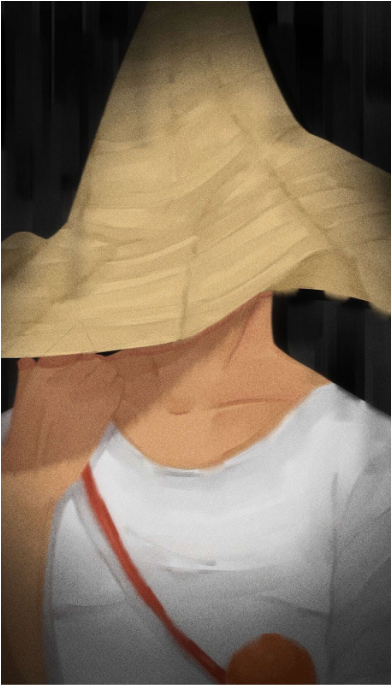
El Cipitio, a popular tale in Nicaragua, El Salvador, and Honduras, is of a 10-year-old. El Cipitio was a product of a forbidden love between his mother, Siguanaba, and the son of the god Tlaloc. Tlaloc cursed the child, making him forever 10 with his feet turned backwards (similar to La Ciguapa). He has a very playful spirit, throws rocks at pretty women, and eats many bananas.
However, he does eat human ashes. He is said to run through fields to throw farmers off, as they never know which direction he’s headed in.
Legends Live On
There you have it, seven more folk tales to tell your children or siblings that aren’t basic. Regardless of whether the scary season is over, these legends live on, much like the many stories and traditions that are passed down to us.
So next time someone asks you for a spooky tale at a sleepover, who are you choosing?


Comments